Using Less to Get More
A Village That Works—Except When It Doesn’t
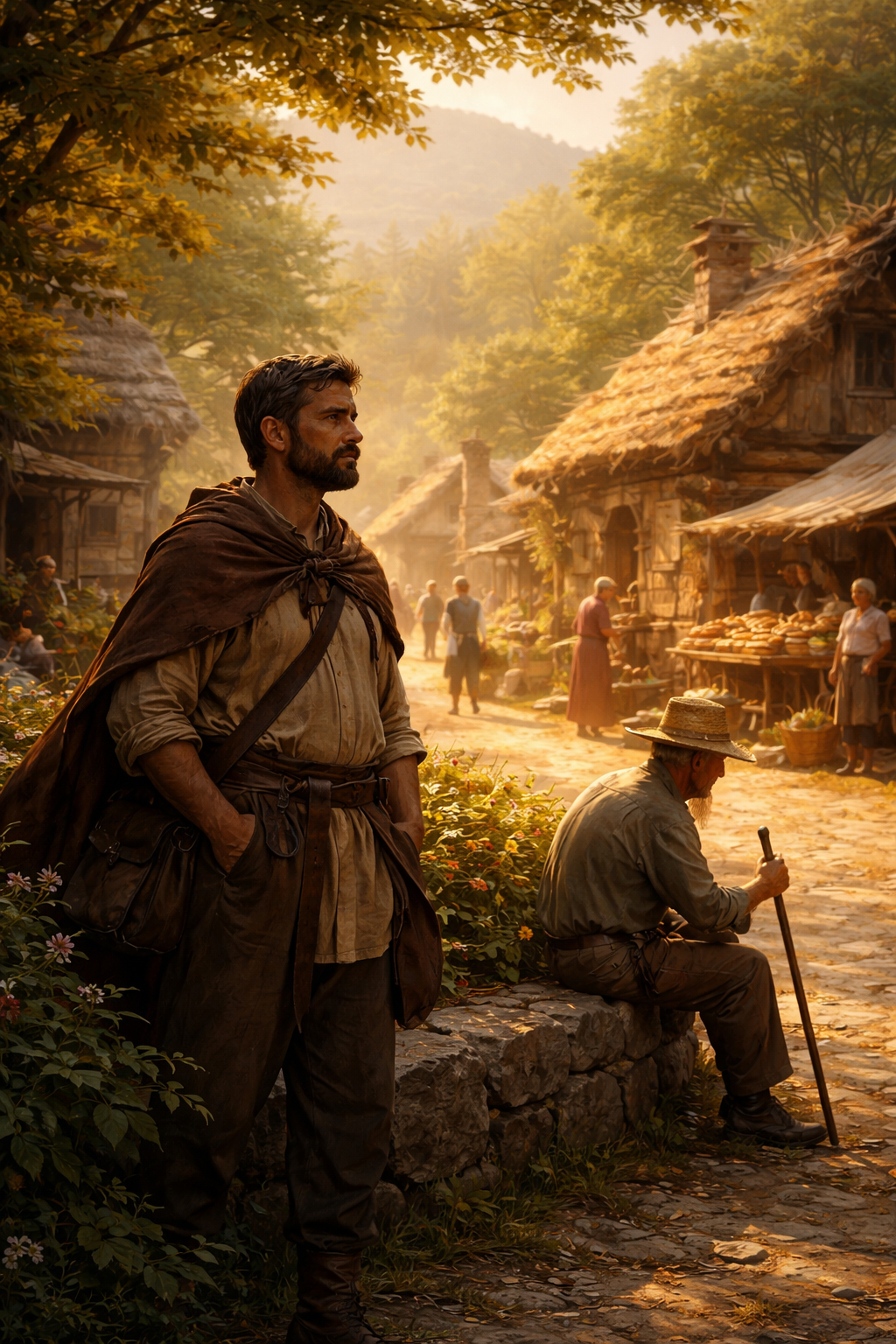
In a quiet valley bordered by low hills and a slow, winding river, there was a village where everything worked—at least on the surface. The roads were worn smooth, the market opened on time, and people knew their roles. It was a practical place. Efficient. Sensible.
And yet, for one man, it was anything but.
Arin was known as reliable. If something needed to be done properly, he was the one people trusted. He noticed details others missed. He spoke clearly. He didn’t waste time. To him, most things were straightforward—if something was wrong, you corrected it; if something didn’t make sense, you clarified it.
But simple interactions rarely stayed simple.
The Problem That Didn’t Make Sense
At the bakery, if he was handed the wrong loaf, what should have been a quick correction stretched into explanation. At the tool shop, a small pricing error turned into a back-and-forth. Even ordinary conversations became heavier than they needed to be.
He wasn’t wrong—that was the frustrating part.
He was usually right.
And yet the outcome felt inefficient. Draining. As if every small moment carried an invisible weight that others didn’t seem to experience.
Over time, it felt like moving through something thick—a kind of resistance that followed him. A simple errand could leave him tired. A short exchange could linger long after it ended.
A quiet, constant kind of hell.
A Different Kind of Conversation
One morning, after another unnecessarily long interaction at the grain stall, Arin took a different route home. A narrow path led toward the edge of the forest.
He wasn’t trying to solve anything. He just wanted quiet.
There, he found an older man sitting on a low wooden fence, watching the road as if it were worth studying.
Arin nodded. The man nodded back.
They sat in silence.
It was unusual. Most people filled silence quickly. Here, nothing required filling.
“People make simple things complicated,” Arin said.
“Sometimes,” the man replied.
Arin waited. Nothing more came.
“If something’s wrong, it should just be corrected. Quickly.”
“That’s one way,” the man said.
Again, silence.
Arin felt the urge to explain—to complete the thought—but something about the stillness made it unnecessary.
So he didn’t.
When he stood to leave, the man added, almost casually, “Not everything needs finishing.”
Trying Something Without Calling It a Strategy
In the days that followed, nothing in the village changed.
But Arin began to notice something—not in others, but in himself.
At the well, a man spoke in a long, roundabout way. Arin felt the familiar pull to tighten the conversation—but instead, he said nothing.
The man finished on his own.
The interaction ended.
Shorter than usual.
At the market, he was handed the wrong item. The old pattern stirred—correct, clarify, ensure understanding. This time, he simply said, “I think this one’s mine.”
The vendor switched it. No discussion.
It was so quick it almost felt incomplete.
But it wasn’t.
Doing Less, and Watching What Happens
Arin didn’t force anything. He didn’t try to become different.
He just began to notice what happened when he did less.
He spoke when needed.
He didn’t when it wasn’t.
He let small things stay small.
And something unexpected began to happen.
The resistance started to thin. Interactions ended sooner. Moments carried less tension. His mind felt quieter afterward—less replaying, less need to revisit.
The Moment That Used to Grow
One afternoon at the bakery, it happened again—the wrong loaf.
For a brief moment, the old pattern returned fully. He could almost see the conversation unfolding.
He paused.
Just long enough.
“This one’s different,” he said.
“Ah—yes. One moment.”
The loaf was replaced.
“Thanks.”
He left.
That was it.
Outside, in the sunlight, he noticed something clearly.
The moment hadn’t grown.
It had stayed the size it was.
What Actually Changed
Later that week, he returned to the path by the forest. The older man was there, watching the road.
“It’s been… easier,” Arin said.
The man nodded.
“I didn’t fix anything.”
“No,” the man said. “You stopped building onto it.”
They watched a cart roll by, its wheels creaking steadily.
The village was the same—same people, same routines, same small imperfections.
But it no longer felt like something to push through.
It felt navigable.
A Way Out That Doesn’t Require Winning
“Does it stay like this?” Arin asked.
“It comes and goes,” the man said.
Not perfect. Not permanent.
But available.
As Arin walked back toward the village, something in him had shifted—not dramatically, not visibly, but enough.
There was less urgency.
Less need to engage with everything.
Less weight in each moment.
The village remained what it was.
But he was no longer caught in it the same way.
Letting Things End Where They End
The light shifted across the road as he walked, stretching and softening.
People moved. Conversations rose and fell. Small imperfections continued, just as before.
But something was different now.
Not everything needed to be completed.
Not everything needed to be answered.
Not everything needed to be held.
Some things—
simply ended on their own.